
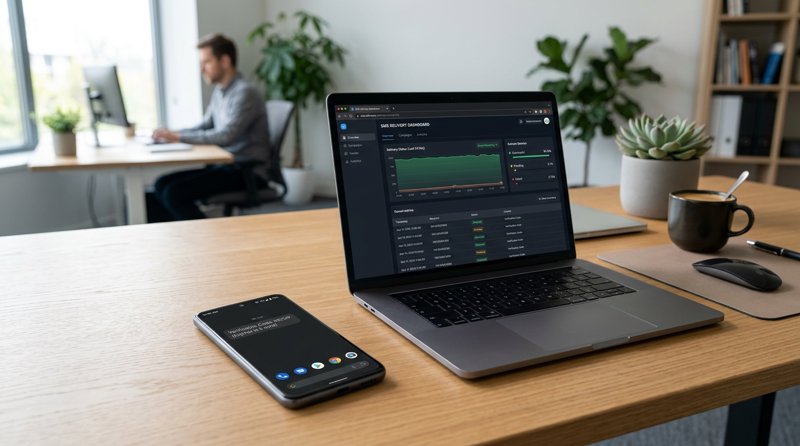
If you have ever encountered the term 'opt' while setting up a business messaging system, you might find yourself asking: what is opt vs sms? This query usually points to two entirely different concepts: the technical difference between OTP (One-Time Passwords) and standard SMS, or the regulatory difference between opt-in compliance rules and standard text messaging.
Clarifying the Terms: OTP vs SMS and Opt-In vs SMS
When business owners and developers search for "what is opt vs sms", they are typically looking for answers in one of two categories. The first is a simple typo-driven comparison: OTP (One-Time Password) versus standard SMS. The second is regulatory: Opt-in/Opt-out requirements versus standard, unrestricted SMS communication. For our international readers asking about the differenza tra opt e sms, 'opt' refers to user consent (opt-in/opt-out) which is legally mandated in many jurisdictions before you can send a commercial SMS.
To clear up the confusion, let us look at the core definitions. A standard SMS is simply the technology used to transmit short text messages over cellular networks. An "opt" refers to the legal status of the recipient's consent, or in a technical context, a security-focused One-Time Password (OTP) sent via that same SMS network. Understanding this distinction is crucial if you are integrating an SMS gateway vs SMS API into your business workflow.
What is an OTP (One-Time Password) SMS?
An OTP is a unique, time-sensitive numerical or alphanumeric code sent to a user's mobile device to verify their identity. It is a security mechanism. The underlying delivery channel is still an SMS, but the routing, priority, and speed requirements are vastly different from a promotional text message. If you are looking for the best sms api for mobile app integration 2026, fast delivery of these verification codes is likely your top priority.
What is SMS Opt-In and Opt-Out Compliance?
Opt-in refers to the process where a customer explicitly grants permission to a business to send them text messages. Conversely, opt-out is the mechanism by which they revoke that permission (usually by replying 'STOP'). Traditional opt in sms services require strict tracking of these consents to prevent massive regulatory fines from telecommunications authorities.
The Complex World of SMS Opt-In Compliance in 2026
For businesses using traditional A2P (Application-to-Person) SMS gateways like Twilio, MessageBird, or Plivo, compliance has become a bureaucratic nightmare. In 2026, carrier regulations require businesses to register their brands, submit campaign drafts, and wait weeks for approval before sending a single message. This process, known as 10DLC (10-Digit Long Code) registration, is designed to enforce strict opt-in rules.
We see this friction clearly in recent compliance updates for major e-commerce brands. For instance, notice requirements like hellorep sms opt-in after:2026-05-15, sotastick sms opt-in after:2026-05-15, sugar-dumplin sms opt-in after:2026-05-12, and vminnovations sms opt-in after:2026-05-12 show how strictly platforms are auditing consent dates. If a business cannot prove exactly when and how a customer opted in after these specific cut-off dates, their messaging capabilities are instantly suspended.
Furthermore, in complex enterprise setups, developers must map out technical interactions. For example, understanding what is interaction type for sms opt in opt out in axp (Avaya Experience Platform) is necessary for routing consent states correctly between your CRM and your contact center. Legacy systems often run into formatting glitches during these setups; if you have ever encountered a broken routing string like sms opt out:n#N##N##N##N##N##N#edit in your platform configurations, you know how fragile traditional telecom infrastructure can be when managing compliance state machines.
Designing an Opt-Out SMS Strategy for Healthcare Organizations
Developing an opt out sms strategy for healthcare organization requirements is particularly sensitive. Clinics, dental practices, and physical therapy centers send critical operational notifications like appointment reminders. While these are transactional, patients must still have a friction-free way to opt out. However, forcing small local clinics to go through complex 10DLC registry approvals just to remind a patient of their appointment is highly impractical. This is why many organizations are turning to alternative delivery methods.
OTP vs. Standard SMS: Technical and Operational Differences
If your inquiry about "what is opt vs sms" is technical (OTP vs. standard SMS), the difference lies in delivery priority, latency, and routing. When a user is trying to log into an application, a 5-minute delay on an OTP code means a lost customer. Standard transactional or promotional SMS, on the other hand, can tolerate minor network delays.
Traditional API providers charge premium rates for high-priority OTP routes. However, for small businesses sending operational alerts, paying these high fees is unnecessary. Below is a comparison of how different message types behave in a standard environment:
| Feature | OTP (One-Time Password) | Transactional SMS (Reminders, Alerts) | Promotional SMS (Marketing) |
|---|---|---|---|
| Latency Requirement | < 10 seconds | < 2 minutes | Non-urgent (hours) |
| Opt-In Requirement | Implicit (requested by user action) | Implicit / Explicit (business relationship) | Strict Explicit Opt-In Required |
| Typical Cost (Traditional) | High (Carrier surcharges apply) | Standard A2P rates | Standard A2P rates |
| MySMSGate Cost | $0.02 flat rate | $0.02 flat rate | $0.02 flat rate |
For developers building mobile or web apps, finding the best simple voice sms api or a reliable Android SMS gateway tutorial can save thousands of dollars in carrier surcharges. By routing these messages through an Android-based gateway, you completely bypass the artificial price inflation imposed by traditional telecommunications monopolies.
How to Send OTP and Transactional SMS via REST API
If you are a developer looking to integrate fast, reliable SMS delivery into your application without dealing with 10DLC registration or carrier approvals, using a simple REST API is the easiest path. MySMSGate turns any Android phone into a high-powered SMS gateway, allowing you to send messages directly through your own SIM card.
Here is how simple it is to trigger an outbound OTP or transactional SMS using a standard curl request:
curl -X POST "https://api.mysmsgate.net/api/v1/send" \
  -H "Authorization: Bearer YOUR_API_KEY" \
  -H "Content-Type: application/json" \
  -d '{
    "to": "+393331234567",
    "message": "Your verification code is 849201. It is valid for 5 minutes.",
    "device_id": "device_id_here",
    "sim_slot": 1
  }'
This single endpoint allows you to control exactly which device and SIM card the message is sent from. Because the message originates from your own Android phone, it uses your local carrier network. There are no registration delays, no carrier approvals, and no hidden segment fees. If a message fails, the balance is automatically refunded to your account.
No-Code SMS Campaigns: Sending Messages Without Writing Code
Not every business owner is a software developer. Many local business operators—such as driving schools, repair shops, and salons—ask: comment envoyer des campagnes sms sans utiliser de code ? (how to send SMS campaigns without using code?). They need the outcome of fewer no-shows and better-informed customers, without the complexity of writing software.
MySMSGate solves this by offering a complete Web Conversations dashboard. Once you connect your Android phone, you can send and receive SMS directly from your computer browser. It functions like a chat interface, allowing you to manage customer conversations, select which SIM card to send from, and even connect multiple phones to a single account (perfect for businesses with multiple local branches).
Setting up the system is incredibly straightforward:
- Create an account at mysmsgate.net and access your dashboard.
- Install the companion Android app on your phone.
- Scan the QR code displayed on your dashboard to instantly pair the device.
- Start sending messages immediately via the web interface or by connecting your account to automation tools like Zapier, Make.com, or n8n.
Why MySMSGate is the Practical Alternative to Twilio and Plivo
Traditional A2P SMS platforms charge high fees and force users to undergo rigorous brand registration processes. If you are operating a local service business outside the United States, these US-centric regulations (like 10DLC) add unnecessary friction. You just want to send appointment confirmations and "ready for pickup" alerts to customers who already know your business.
MySMSGate offers a practical path forward. By utilizing an android sms messaging and communication platform, you send messages directly from your business's own mobile number. Your customers see a familiar local number, which dramatically increases trust and response rates. Furthermore, our pricing is completely transparent: a flat $0.02 per SMS with no monthly fees, no contracts, and no billing per 160-character segment. Whether your message is short or long, you only pay one flat charge. Check out our Twilio alternatives comparison to see how much your business can save.
Frequently Asked Questions
Find answers to common questions about SMS compliance, OTPs, and gateway setups.
What is the difference between OTP and standard SMS?
An OTP (One-Time Password) is a specific type of high-priority, time-sensitive transactional SMS used for security verification. Standard SMS refers to any text message sent over the cellular network, which can include personal chats, marketing campaigns, or transactional updates.
Do I need carrier approval or 10DLC registration to use MySMSGate?
No. Because MySMSGate routes messages through your own Android phone and SIM card, you do not need to register your brand, submit campaigns for approval, or comply with strict A2P 10DLC registries. You can begin sending messages immediately after connecting your phone.
How does MySMSGate handle failed SMS deliveries?
Unlike traditional gateways that charge you regardless of whether a message is delivered, MySMSGate features an automatic failed SMS refund. If a message fails to send from your device, your account balance is instantly refunded.
Can I send SMS campaigns without coding?
Yes. MySMSGate includes a Web Conversations dashboard that allows you to send, receive, and manage SMS conversations directly from your computer's web browser, with no coding required. You can also connect to tools like Zapier or Make.com for easy automation.


Comments (0)
Be the first to comment!