
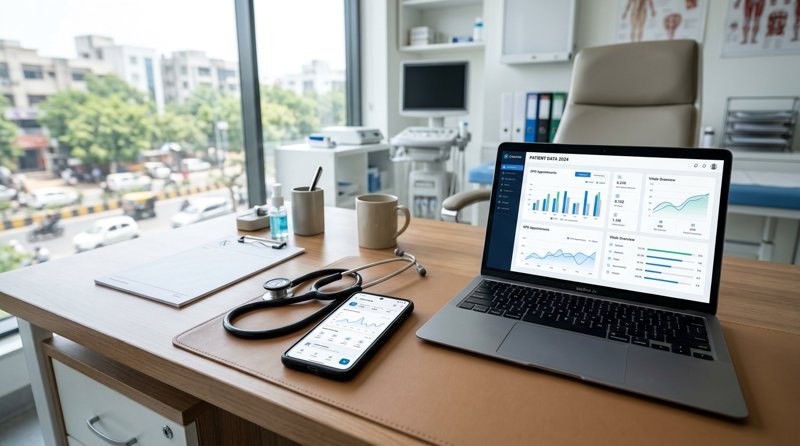
The Tuesday Morning Clinic Crisis
Imagine a typical Tuesday morning in a busy clinic in Pune or Bengaluru. The waiting room is full, the phone is ringing incessantly with patients asking if their reports are ready, and the doctor is trying to log into the patient management system. To access sensitive health records, the system requires a one-time password. However, the otp doctor sms that was supposed to arrive never shows up, or it is delayed by several minutes. This is not just a technical glitch; it is a bottleneck that slows down healthcare delivery and frustrates patients who have been waiting for hours.
In the Indian context, the challenge of sending a simple text message is surprisingly high. Whether it is an OTP for logging into a portal, a reminder for a vaccination, or a notification that a lab report is ready, the infrastructure usually relies on bulk SMS aggregators. These providers are tied into a complex web of regulations that often make life difficult for a small practice owner who just wants to keep their patients informed without becoming a regulatory expert.
The DLT and TRAI Regulatory Maze
Any business in India sending messages through traditional bulk channels must navigate the Distributed Ledger Technology (DLT) system mandated by the Telecom Regulatory Authority of India (TRAI). For a doctor running a small clinic, this process is often the first and most significant hurdle. You are required to register your clinic as a principal entity on a platform like Jio, Airtel, Vi, or BSNL. Then, you must register every single 'Header' (the 6-character sender ID) and, most frustratingly, every single message template.
If you want to change a single word in your appointment reminder, you must submit a new template for approval. If the template is rejected because of a minor formatting error, your communication stops. This system was designed to curb spam, but for a legitimate medical practice trying to send an otp doctor sms, it often feels like an unnecessary layer of corporate complexity. Furthermore, many small clinics find that their low volume of messages doesn't justify the effort or the monthly minimums often required by large aggregators like MSG91 or Gupshup.
Why Templates Fail Small Practices
The rigid nature of DLT templates means that personalized patient care is often sacrificed for compliance. When you are forced to use a pre-approved script, you lose the ability to add specific instructions that might be vital for a patient's visit. This is where many practitioners begin looking for a more flexible way to manage their messaging needs.
SIM-Based Routing vs. Traditional Bulk SMS
There is a fundamental difference between how a bulk provider sends a message and how a SIM-based gateway operates. A bulk provider uses an A2P (Application-to-Person) route, which is why it is subject to the strict DLT rules and template filtering. In contrast, a SIM-based gateway sends the message through a physical SIM card inside an Android phone that you already own. To the network, the message looks like a standard person-to-person (P2P) text, similar to one you would send to a friend.
This shift in routing changes everything for a local clinic. Because the message leaves from your own Jio or Airtel number—the same number your patients might already have saved in their contacts—you do not have to register templates on a DLT portal. The message is sent exactly as you write it in your software. This is particularly useful for an OTP SMS reader for Indian business needs, where the speed and reliability of the internal clinic login are paramount.
| Feature | Traditional Bulk SMS (A2P) | SIM-Based Gateway (MySMSGate) |
|---|---|---|
| Sender ID | 6-character Alpha (e.g., BK-DRCLIN) | Your own mobile number |
| Template Approval | Required for every message type | No template registration needed |
| Carrier Setup | Complex DLT registration | Uses your existing SIM plan |
| Integration | API or Web Portal | REST API / Twilio-compatible |
| Pricing Model | Metered per 160-character segment | Non-metered sending volume |
Integrating SMS into Clinic Management Software
Most modern Indian clinics use some form of software to manage patient records. Wiring an otp doctor sms capability into this software shouldn't require a team of developers. Using a simple REST API, a clinic can automate the entire process. For example, when a receptionist marks an appointment as confirmed, the system can automatically trigger a message via the gateway phone sitting on the desk.
For those already using existing tools, MySMSGate provides a Twilio-compatible endpoint. This means if your software was originally built to work with Twilio, you can simply change the base URL in your configuration to point to your own Android phone. This allows you to compare the experience with Twilio and see how much simpler it is to operate without the constant fear of a 'Carrier Violation' error or a blocked sender ID.
The Power of Inbound Webhooks
Messaging isn't just about sending; it is about listening. When a patient replies 'Yes' to an appointment reminder, a SIM-based gateway can capture that incoming text and forward it to your clinic software via a webhook. This creates a two-way conversation without the doctor ever having to pick up the physical phone. It allows for a level of responsiveness that traditional one-way bulk SMS services simply cannot match.
Managing Costs and Message Length
In India, the way SMS is billed can be deceptive. Most providers charge per 160-character segment. If you use a single Unicode character—like a special symbol or a local language character—the limit often drops to 70 characters. A single long message can suddenly be billed as three or four segments. This is a significant concern for cost-conscious practices. When using a SIM-based approach, you are utilizing the SMS pack already included with your Jio or BSNL SIM card. This means that a long message is handled differently, often allowing you to send more detailed instructions to patients without worrying about a metered provider's per-segment billing logic.
Furthermore, because you are using your own SIM, the cost does not fluctuate based on whether you are sending a transactional OTP or a promotional greeting. You are simply using the capacity of the hardware and the plan you have already paid for. For a small business, this predictability is invaluable for budgeting.
Setting Up Your Clinic Gateway
The transition to a more reliable messaging system is straightforward. It starts with an Android phone that stays powered on and connected to the internet in your office. You install the gateway app and pair it with your account by scanning a QR code from the dashboard. Once paired, your phone is now an active SMS gateway. You can then use our integration guides to connect it to your pharmacy, lab, or clinic management system.
This setup is particularly effective for practices with multiple branches. Each branch can have its own Android phone with a local SIM, ensuring that patients receive messages from a number they recognize as being local to their specific clinic. This builds trust and increases the likelihood that patients will actually read and respond to the notifications.
Taking Control of Your Patient Communication
The first step toward a more reliable otp doctor sms system is to stop fighting the limitations of bulk aggregators. If you are tired of DLT template rejections and the high costs of metered segments, it is time to look at a solution that uses the hardware you already own. Start by evaluating your current message volume and identifying where the bottlenecks are—is it the registration process, the cost, or the lack of two-way communication? By moving to a SIM-based gateway, you can reclaim control over your clinic's digital voice and ensure that your patients always stay informed, one message at a time.


Comments (0)
Be the first to comment!